
OPEC oil price impact
OPEC announcements often trigger sharp oil price moves. Understanding how to trade oil during OPEC meetings helps traders anticipate volatility and manage risk effectively.
{etoroCFDrisk}% of retail CFD accounts lose money - You never lose more than the amount invested in each position
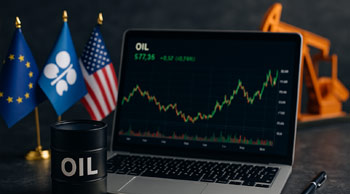
OPEC does not directly set oil prices. Instead, its production decisions influence expectations about global oil supply. Oil prices are ultimately determined by market dynamics, including supply and demand, investor sentiment, geopolitical developments and macroeconomic conditions. OPEC announcements represent one factor among many that contribute to price movements in crude oil markets.
Oil prices may decline after production cuts if the decision was already anticipated by the market. In such cases, prices may have adjusted before the announcement. Market reactions depend on how the decision compares with expectations, as well as on accompanying statements, economic outlooks and broader market conditions affecting supply and demand balance.
OPEC announcements are often linked to increased oil price volatility, but not in every case. Volatility tends to be higher when decisions differ from expectations or when communication introduces uncertainty. When outcomes align closely with forecasts, price reactions may be more moderate, especially if broader market conditions remain stable.
OPEC and OPEC+ meetings are key events in the global oil market, as they influence expectations surrounding crude oil supply and pricing. Decisions related to production levels, output adjustments or quota extensions are closely monitored by market participants and often coincide with short-term price fluctuations in Brent and WTI crude oil. During these periods, oil markets may experience heightened volatility as prices adjust to new information and revised supply outlooks. Understanding how OPEC announcements affect oil price behaviour helps explain why price movements can intensify around meeting dates and how traders and analysts interpret these events within a broader market context.
For readers who want to better understand how oil trading works in global markets, these events illustrate how supply expectations and policy signals can influence price movements.
⭐ Key Essentials — Oil Prices and OPEC Announcements
- OPEC announcements can influence short-term movements in crude oil prices.
- Production quota decisions affect market perceptions of global oil supply.
- Oil price reactions depend on how announcements differ from prior market expectations.
- Brent and WTI crude oil may respond differently to OPEC-related news.
- Periods surrounding OPEC meetings are often associated with increased market volatility.
The Organization of the Petroleum Exporting Countries (OPEC) is a group of major oil-producing nations whose objective is to coordinate oil production policies among its members. Together with its allies — commonly referred to as OPEC+ — the organisation plays a central role in shaping expectations around global crude oil supply. Even though OPEC does not directly set oil prices, its announcements are closely followed because they influence how markets perceive future supply and balance conditions.
OPEC meetings and official statements are considered key information events in the oil market. Investors, analysts and traders monitor these announcements to reassess supply forecasts, inventory levels and potential price adjustments in Brent and WTI crude oil.
OPEC and OPEC+ collectively represent a significant share of global oil production. By coordinating output policies among member countries, the group aims to promote market stability and avoid extreme imbalances between supply and demand.
🔹 Key aspects of OPEC’s role:
Because oil markets are forward-looking, even potential changes in production policy can affect prices before any actual supply adjustment takes place.
Production quotas are among the most closely watched outcomes of OPEC meetings. These quotas define how much oil each member country is expected to produce over a given period. Changes to these limits influence expectations about future supply availability.
📌 Why quotas matter for oil markets:
Markets typically react based on whether quota decisions align with, exceed or fall short of prior expectations.
OPEC decisions are taken during scheduled ministerial meetings, usually accompanied by press releases and press conferences. While the official decisions are announced at a set time, market speculation often begins weeks in advance.
📅 Key elements to monitor:
Oil price fluctuations frequently occur not only at the moment of announcement, but also during the lead-up and aftermath as markets interpret the information.
OPEC announcements are often associated with periods of heightened oil price volatility. During these windows, prices may react rapidly as new information is absorbed and reassessed by market participants.
Several factors contribute to increased volatility during OPEC-related events:
⚡ Drivers of volatility:
Even when no policy change is announced, market reactions can still occur if communication differs from expectations.
Oil market reactions to OPEC announcements can differ depending on the time horizon.
⏱️ Typical reaction patterns:
This distinction helps explain why oil prices sometimes move strongly during announcements, then stabilize or retrace in subsequent sessions.
Although Brent and WTI are both influenced by OPEC announcements, their reactions may differ due to regional factors.
🌍 Key differences:
As a result, the same OPEC announcement may not produce identical price movements across benchmarks.
Not all OPEC decisions have the same market impact. Some policy outcomes tend to attract more attention due to their implications for supply and market balance.
Production cuts are often associated with attempts to address oversupply or declining prices.
✂️ Key characteristics:
Market reactions depend largely on whether the cuts exceed or merely confirm expectations.
In contrast, production increases may be announced when demand is expected to rise or to prevent supply shortages.
➕ Typical effects:
Sometimes, OPEC chooses to extend existing agreements without changing quotas.
🔁 Why extensions still matter:
Even without numerical changes, such decisions can influence price behaviour.
Beyond formal decisions, communication matters.
🎙️ Market-moving elements:
These qualitative signals often play a significant role in shaping oil price reactions.
Around OPEC announcements, oil markets often enter phases of intensified activity due to rapidly changing expectations and information flow. During these periods, market participants adjust their positions based on new supply signals, policy guidance and broader market context. While approaches can vary, trading behaviour around OPEC meetings tends to reflect the specific challenges associated with high volatility, uncertainty and information asymmetry.
Understanding how oil is commonly traded in these conditions helps explain observed price movements without implying any recommended action or strategy. Investors interested in buy crude oil online can explore different financial instruments that track or respond to oil price movements.
For a broader overview of how oil markets function and the main ways oil is traded, you can refer to our detailed guide on oil trading.
During periods of increased volatility, such as OPEC announcement windows, market activity often reflects a combination of short-term reactions and positioning adjustments.
🔍 Observed trading behaviours include:
In these contexts, price action may be driven as much by interpretation and sentiment as by the announced policy itself.
Oil market responses to OPEC announcements can differ depending on the time horizon considered.
⏱️ Short-term dynamics:
📆 Longer-term perspective:
These differing horizons explain why oil prices may react strongly during announcements yet evolve differently over subsequent sessions or weeks.
High-impact news events, including OPEC announcements, often coincide with changes in market conditions.
⚠️ Common observations:
These factors can affect how prices are formed and transmitted across oil markets, particularly during moments of peak volatility.
OPEC announcements are widely regarded as high-risk periods due to elevated volatility and rapid information-driven price adjustments. Understanding these risks is essential for interpreting oil market behaviour during such events.
Oil prices often exhibit sharp movements around OPEC meetings, sometimes within minutes of announcements.
📈 Characteristics of these periods:
Such movements can occur even in the absence of major policy changes, particularly when announcements diverge from expectations.
During fast-moving market conditions, execution risk becomes more pronounced.
⚠️ Key execution-related factors:
These elements help explain why prices during OPEC announcements may behave differently than during normal trading sessions.
While this guide does not provide investment advice, risk management is widely recognized as a critical component of market participation during volatile periods.
🛡️ Commonly referenced considerations include:
These principles are frequently discussed in the context of oil market analysis and education.
Although OPEC announcements attract significant attention, they represent only one of several forces influencing oil prices. Comparing OPEC-related impacts with other market drivers provides a broader analytical perspective.
Geopolitical developments can influence oil markets independently of OPEC.
🌍 Examples include:
In some cases, geopolitical factors may outweigh OPEC decisions in shaping price movements.
Macroeconomic indicators also play a key role in oil market dynamics.
📊 Influential data releases:
Oil prices often respond to a combination of macroeconomic data and OPEC-related news rather than to one factor alone.
Other fundamental drivers frequently interact with OPEC announcements.
⛽ Key elements:
These factors can amplify, offset or neutralise the impact of OPEC decisions on oil prices.
eToro is a multi-asset platform that offers both investing in stocks and cryptocurrencies, as well as trading assets in the form of CFDs.
Please note that CFDs are complex instruments and come with a high risk of losing money rapidly due to leverage. {etoroCFDrisk}% of retail investor accounts lose money when trading CFDs with this provider. You should consider whether you understand how CFDs work and whether you can afford to take the high risk of losing your money.
You will never lose more than the amount invested in each position.
This communication is for informational and educational purposes only and should not be considered investment advice or a recommendation. Past performance is not an indication of future results.
Copy Trading is not equivalent to investment advice. The value of your investments may go up or down. Your capital is at risk.
Investing in and holding cryptoassets is offered by eToro (Europe) Ltd as a digital asset service provider registered with the AMF. Investments in cryptoassets are highly volatile. No consumer protection. Tax on profits may apply.
eToro USA LLC does not offer CFDs and makes no representation and assumes no liability as to the accuracy or completeness of the content of this publication, which has been prepared by our partner utilizing publicly available non-entity specific information about eToro.