
United States Natural Gas Fund
UNG, the United States Natural Gas Fund, offers simple exposure to natural gas prices. Here’s how to trade it using ETFs, CFDs, and short-term strategies.
{etoroCFDrisk}% of retail CFD accounts lose money - You never lose more than the amount invested in each position
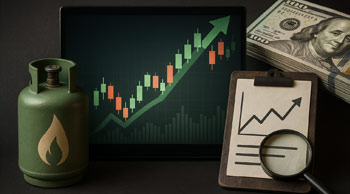
UNG is an ETF that tracks front-month natural gas futures, giving traders exposure to gas price movements without trading futures directly. Because it rolls contracts monthly, its performance may differ from spot prices. UNG is mainly used for short-term strategies due to volatility, roll costs, and futures market structure.
It depends on the broker. Some offer the ETF directly, but many provide access only through CFDs because US ETFs may not be available to all European retail traders. CFDs allow long and short exposure but include spreads, overnight fees, and leverage risks. Always check your broker’s conditions before trading.
UNG tracks futures, not spot gas. Futures prices reflect expectations, storage levels, seasonality, and market sentiment. Monthly contract rollovers also cause performance gaps. As a result, UNG can rise or fall differently than the spot market, especially during periods of strong contango or backwardation.
UNG is highly volatile and reacts sharply to weather forecasts, storage data, and geopolitical events. ETF costs, futures roll effects, and potential CFD fees also influence results. Traders should manage risk carefully through stop-loss orders, position sizing, and active monitoring because price swings can be sudden and significant.
UNG (United States Natural Gas Fund) is a widely used instrument for gaining exposure to natural gas price movements. The fund tracks front-month natural gas futures, making it highly sensitive to volatility, seasonal demand, and shifts in energy supply. Depending on the broker and region, traders can access UNG by purchasing the ETF directly or through CFDs that mirror its price action. Both methods allow long and short positions but come with different costs, risks, and holding conditions. Understanding how UNG works, what influences natural gas prices, and how futures markets behave is essential before placing a trade. Traders often monitor the live natural gas price and market trends to better understand the dynamics driving gas futures.
⭐ Key Takeaways — Essential Points Before Trading UNG
- ⭐ UNG is a US-listed ETF tracking front-month natural gas futures.
- 🔁 Access varies: some brokers offer the ETF, others only CFDs linked to UNG.
- ⚡ Highly volatile instrument, suitable for active and short-term traders.
- 🌡 Influencing factors: weather forecasts, EIA storage data, supply disruptions, seasonality.
- 🔄 Long or short positions possible based on market direction.
- 💸 Costs differ: ETFs have expense ratios; CFDs may include spreads and overnight fees.
- 🛡 Strong risk management is necessary due to rapid price swings.
UNG (United States Natural Gas Fund) is one of the most recognized instruments for gaining exposure to natural gas price movements. Instead of buying natural gas directly or trading futures contracts, UNG offers a simplified way to follow the market through a regulated fund. Designed to reflect daily changes in front-month natural gas futures, UNG is widely used by traders seeking volatility, short-term opportunities, or a way to speculate on energy market trends.
UNG is not the same as physical natural gas. It is a financial product built on futures, which means its performance can deviate from the underlying spot market. Understanding how it works is essential before placing any trade.
UNG tracks front-month natural gas futures traded on the NYMEX. This means the fund does not hold natural gas itself but follows the price of the closest futures contract.
Key characteristics:
Because UNG renews its futures positions monthly, traders must consider the effect of roll costs—sometimes a major factor influencing long-term returns.
UNG does NOT track the spot price directly.
This difference matters because:
In some cases, natural gas spot prices may remain stable while UNG moves significantly due to futures curve structure. Traders should always analyze futures, not just spot charts.
UNG attracts traders for several reasons:
For many retail traders, UNG is the most accessible way to trade natural gas price movements without entering the futures market directly.
UNG can be traded in two main ways depending on your broker:
Both allow speculation on natural gas, but the mechanics, costs, and risks differ.
Some brokers allow you to buy the UNG ETF directly like any other fund.
Advantages:
However, not all brokers in all regions support US ETFs. European retail traders, for example, may have limited access due to regulatory restrictions.
Most retail traders access UNG through CFDs (Contracts for Difference).
Benefits of UNG CFDs:
CFDs replicate the ETF price but include additional costs such as spreads, overnight financing, and potential leverage risks.
| Feature | UNG ETF | UNG CFD |
|---|---|---|
| Leverage | ❌ No | ✔️ Yes (optional) |
| Overnight Fees | ❌ No | ✔️ Yes |
| Long-Term Holding | ✔️ Possible | ❌ Costly |
| Short Selling | ❌ Limited | ✔️ Easy |
| Sensitivity to Market | Moderate | High (due to leverage) |
In summary:
For traders looking to speculate on gas prices directly, some platforms also offer natural gas trading with CFDs, which mirrors futures price movements without requiring access to the ETF itself.
Trading UNG requires a mix of market analysis, risk control, and understanding of natural gas fundamentals. This step-by-step roadmap helps you approach UNG trading efficiently and safely.
Before anything else, ensure your broker offers:
Check for:
A good broker should offer transparent pricing and access to natural gas market data.
UNG moves with natural gas futures—not with general stock market sentiment.
Focus on:
UNG is extremely sensitive to unexpected events, making analysis essential.
Once you understand market conditions, choose your direction:
UNG is a popular short-sell instrument during periods of high supply or mild weather forecasts.
Risk management is critical due to UNG’s volatility.
Best practices:
UNG can move several percentage points per hour; risk controls protect your account.
Once your plan is set:
UNG is not a “set and forget” instrument—active monitoring is part of trading.
UNG is heavily influenced by the factors that move natural gas futures, not just the spot market. Because the fund tracks front-month futures contracts, its price reacts strongly to short-term shifts in supply, demand, and market expectations. For traders, understanding these drivers is essential to anticipating volatility, spotting opportunities, and avoiding unexpected moves. Natural gas is one of the most event-driven commodities, and UNG reflects this sensitivity almost instantly.
Weather is one of the most powerful catalysts for natural gas volatility — and therefore for UNG.
Natural gas demand spikes in winter for heating and in summer for electricity and cooling. Traders closely monitor:
Weather models can change daily, causing rapid price movements. This is why UNG often experiences large intraday swings during winter months.
Every Thursday, the U.S. Energy Information Administration (EIA) releases its weekly natural gas storage report — a major market-moving event.
These reports show whether gas storage is:
UNG traders often watch storage deviations (“surprises”) rather than absolute numbers. A single unexpected storage withdrawal can generate strong volatility.
Natural gas markets react instantly to supply disruptions, making UNG a sensitive instrument during global events.
Key triggers include:
These shocks often lead to sharp and unexpected moves in futures prices, which UNG replicates with high volatility.
Because UNG is based on futures, the shape of the futures curve affects its performance.
🔁 Contango: futures prices are higher than the spot price
UNG loses value when rolling contracts (negative roll yield)
📉 Backwardation: futures prices are lower than spot
UNG benefits from positive roll yield
Understanding the futures curve is crucial for anyone trading UNG, especially for positions held longer than a few days or weeks.
Trading UNG involves specific costs and structural risks that every trader should consider.
UNG is not a simple track-the-price instrument — both ETF mechanics and CFD conditions influence results. Recognizing these factors helps traders set realistic expectations and manage exposure responsibly.
UNG is an actively maintained ETF that carries:
These costs accumulate over time, which is why UNG is generally a short-term trading vehicle, not a long-term investment.
For traders accessing UNG via CFDs, additional costs apply:
CFDs offer flexibility and the ability to short UNG easily, but they are typically unsuitable for long-term holding due to financing costs.
Natural gas is one of the most volatile commodities in the world — and UNG reflects that volatility directly.
Traders should prepare for:
Stop-loss orders, proper sizing, and avoiding excessive leverage are crucial when trading UNG.
Every month, UNG rolls its futures contracts.
This process can either:
Roll costs are often the main reason UNG underperforms natural gas spot prices over long time periods. Traders planning multi-week strategies should always check the current futures curve.
UNG is popular, but it is not the only way to trade natural gas. Depending on trading style, region, or volatility tolerance, several alternatives may be more suitable.
For traders seeking amplified market exposure, leveraged products such as the 2x leveraged natural gas ETF (BOIL) for bullish strategies and the short natural gas ETF (KOLD) for bearish exposure are often used to capitalize on short-term natural gas price volatility.
These ETFs move faster than UNG, making them attractive for high-volatility strategies — but also much riskier.
European traders often rely on locally listed gas products, such as:
These products allow regulated exposure without accessing US ETFs directly.
Professional or experienced traders may prefer natural gas futures (NG) on CME/NYMEX.
Benefits:
But futures require higher capital, margin requirements, and advanced knowledge.
eToro is a multi-asset platform that offers both investing in stocks and cryptocurrencies, as well as trading assets in the form of CFDs.
Please note that CFDs are complex instruments and come with a high risk of losing money rapidly due to leverage. {etoroCFDrisk}% of retail investor accounts lose money when trading CFDs with this provider. You should consider whether you understand how CFDs work and whether you can afford to take the high risk of losing your money.
You will never lose more than the amount invested in each position.
This communication is for informational and educational purposes only and should not be considered investment advice or a recommendation. Past performance is not an indication of future results.
Copy Trading is not equivalent to investment advice. The value of your investments may go up or down. Your capital is at risk.
Investing in and holding cryptoassets is offered by eToro (Europe) Ltd as a digital asset service provider registered with the AMF. Investments in cryptoassets are highly volatile. No consumer protection. Tax on profits may apply.
eToro USA LLC does not offer CFDs and makes no representation and assumes no liability as to the accuracy or completeness of the content of this publication, which has been prepared by our partner utilizing publicly available non-entity specific information about eToro.